Plastic pollution is a major environmental issue in France, particularly in the Provence-Alpes-Côte d’Azur (PACA) and Occitanie regions, which are heavily affected by pressures arising from human activities along the coast and tourism. The Mediterranean is now one of the marine areas most affected by plastic pollution. According to Ifremer (2023), it is the most affected marine sub-region, with an average density of 39 items per km² for floating macro-litter and 510 items per km² for macro-litter on the seabed.
France has adopted ambitious frameworks aimed at reducing single-use plastics and promoting sustainable alternatives. In particular, the AGEC Act (2020) and the European Single-Use Plastics Directive encourage waste reduction at source and the development of infrastructure to promote more sustainable practices, such as access to free drinking water in public spaces.
These policies provide a favourable framework for local initiatives targeting the priority sources of land-based plastic pollution, which have been identified as major contributors to marine litter. Despite these advances, reliance on plastic bottles remains high in the PACA and Occitanie regions, particularly in contexts of on-the-go consumption linked to tourism, outdoor leisure activities and events.
Beyond their visible environmental impacts, plastic bottles also have a considerable climate cost: their carbon footprint is up to 2,430 times greater than that of tap water when their entire life cycle is taken into account.
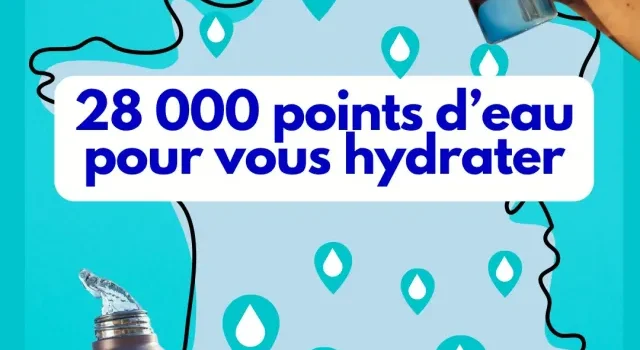
The project therefore aims to identify ‘white spots’ – that is, areas with insufficient numbers of accessible water points – to engage city authorities and local councils, and to encourage public access premises to install new facilities. These new water points will be incorporated into a Watermap and then promoted to users through communication campaigns, with a view to fostering a lasting change in behaviour.
By facilitating access to drinking water and supporting the installation of water points where they are lacking, the project takes concrete action to tackle a key source of plastic pollution, contributing to the long-term reduction of waste found in the Mediterranean and to the ecological transition of local areas.